Why your link click reports are wrong (and what's actually happening)
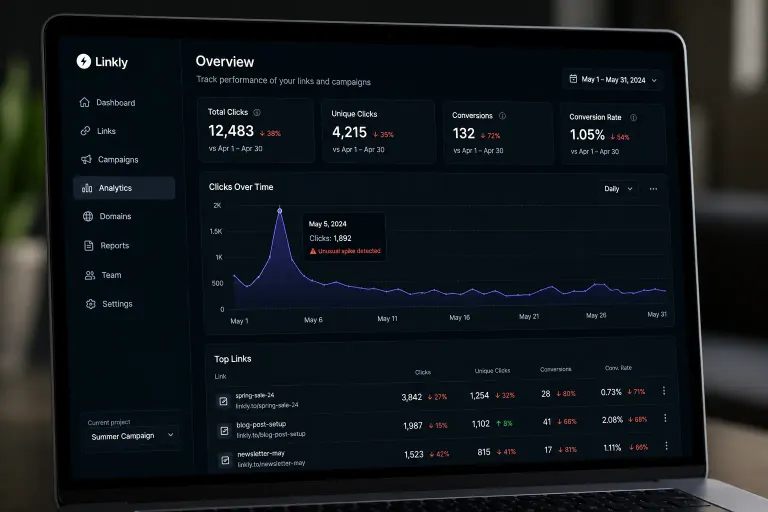
Bots, security scanners, link previews, and repeat clicks can inflate reports far beyond real human traffic.

Linkly Team
If your link says it got 1,000 clicks, there is a good chance that number is wrong.
Sometimes very wrong.
What is actually happening
Click data gets inflated because a lot of systems touch links before real people do.
Common sources of inflated clicks include:
- Bots scanning links
- Email security tools pre-clicking links
- Link previews from apps like Slack and iMessage
- Repeated clicks from the same user
- Internal QA or team testing
If you need a quick sanity check, Linkly's click inflation estimator can help estimate how much of a reported click count may be automated or low-intent traffic.
So what you see might be:
1,000 clicks
What actually happened might be closer to:
300 real humans
That gap matters.
A real example
We saw campaigns where the reported clicks looked strong:
- Reported clicks: 2,400
- Actual conversions: extremely low
After digging in, most of the clicks were automated scans.
The campaign was not failing in the way the dashboard made it look. The click number itself was polluted.
Why this matters
If your data is wrong, every decision built on top of that data gets weaker.
You might:
- Misjudge campaign performance
- Overvalue a channel that is mostly bot traffic
- Underestimate pages that are converting well
- Send clients reports that create confusion
- Lose trust when clicks and outcomes do not match
Raw click count is useful, but only if you understand what is inside it.
What to look for
Better systems do more than count every hit.
They help you separate useful signal from noise by:
- Filtering obvious bots
- Separating unique clicks from total clicks
- Showing cleaner analytics
- Making suspicious traffic easier to spot
- Giving client reports numbers that are easier to defend
Cleaner reporting also depends on cleaner campaign setup. Use a UTM builder before launch and a link cleanliness checker before reporting so inflated clicks are not mixed with avoidable tracking mistakes.
The shift
Stop asking:
How many clicks did I get?
Start asking:
How many real users clicked?
That is the number that matters for campaign decisions.
Bottom line
Click reports are often inflated because many clicks are not real human intent.
Tools like Linkly focus on cleaner tracking so you are not making decisions based on numbers that look better than they are.